

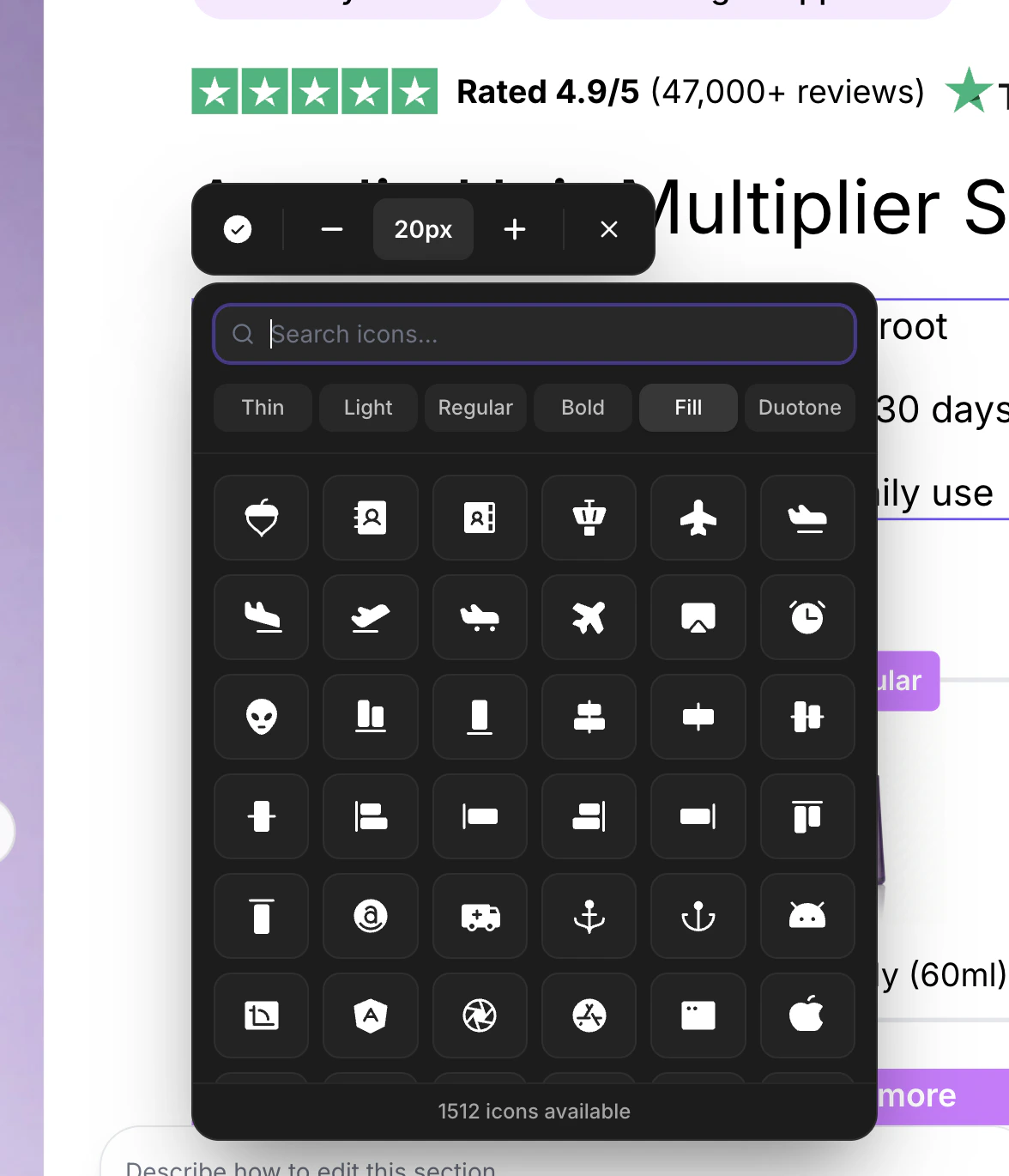
The icon toolbar open with icon picker and controls visible.
Opening the Toolbar
Click on any icon element in the canvas. The toolbar appears above the icon.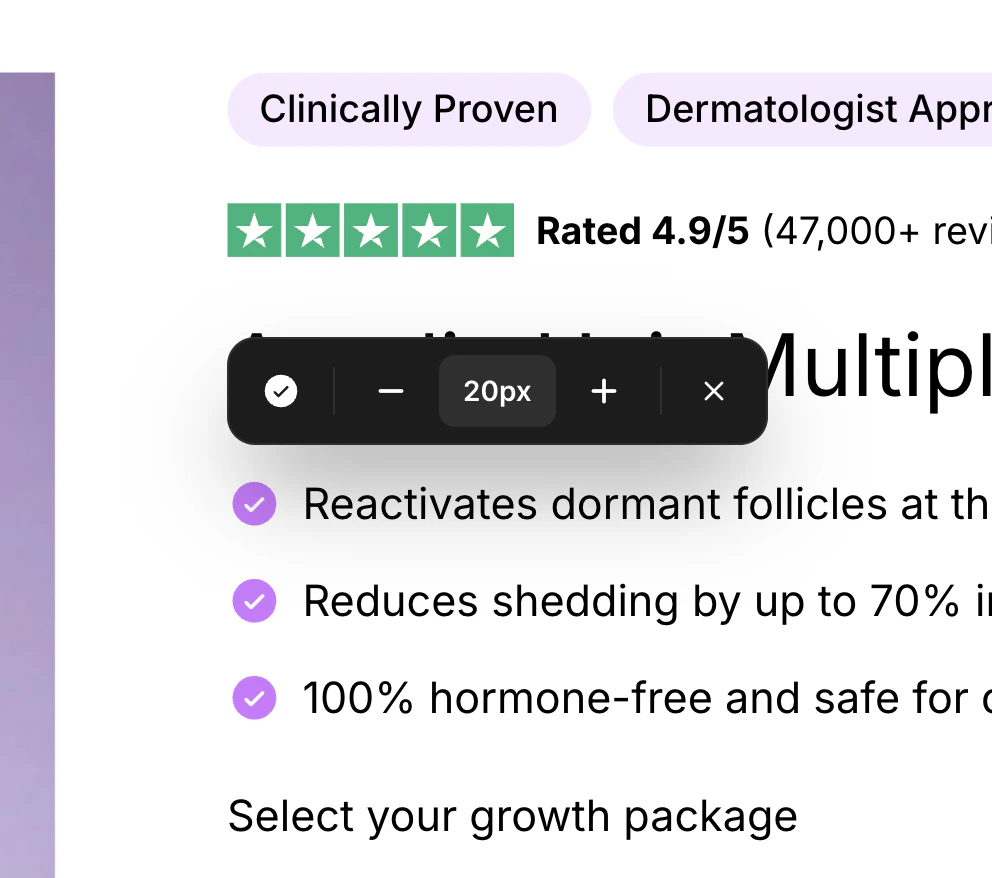
The icon toolbar in its closed state.
The toolbar closes when you click outside of it, press the Escape key, or interact with another element on the canvas.
Toolbar Controls
The icon toolbar includes the following controls from left to right:Change Icon
Click the current icon button (first button, showing a preview of the active icon) to open the icon picker panel. This panel has two tabs:Icon Library tab
Icon Library tab
The library tab provides access to a collection of thousands of icons. Features include:
- Search bar — Type to filter icons by name (e.g., “arrow”, “heart”, “check”). The search is instant and filters as you type. Clear the search with the X button.
- Weight selector — Six weight options displayed as buttons: Thin, Light, Regular, Bold, Fill, and Duotone. Click any weight to preview all icons in that style.
- Icon grid — A scrollable grid showing icons in the selected weight. The currently active icon is highlighted with a ring. Click any icon to apply it immediately.
- Icon count — The footer shows how many icons are available (or how many match your search).
Custom SVG tab
Custom SVG tab
The custom SVG tab lets you upload your own icon as an SVG file. This is useful for brand-specific icons or icons not available in the built-in library.
- Drag and drop — Drag an SVG file onto the upload area.
- Click to browse — Click the upload area to open a file picker.
- File requirements — SVG format only, maximum 100KB file size.
- Color preservation — Your custom SVG’s original colors are preserved (unlike built-in icons which use the current text color).
The Custom SVG tab is available for sections with larger, more prominent icon elements (such as benefit sections with feature icons). Sections with smaller icons only support built-in icons from the library.
Position Toggle
For icons inside button elements, Left and Right buttons appear, letting you place the icon on either side of the button text. The currently active position is highlighted.Size Controls
Three controls adjust the icon size in pixels:- Minus (-) — Decrease size by 2px (minimum: 12px)
- Size display — Shows the current size (e.g., “24px”) in a highlighted badge
- Plus (+) — Increase size by 2px (maximum: 64px)
Delete Icon
For icons inside buttons, a trash icon button lets you remove the icon entirely from the button.Close
The X button closes the toolbar.Icon Weights Explained
Icons support six visual weights, allowing you to match the icon style to your brand:Custom SVG Guidelines
When uploading custom SVGs, follow these guidelines for best results:- Use viewBox — Ensure your SVG has a
viewBoxattribute for proper scaling. - Optimize file size — The maximum is 100KB, but smaller files load faster.
- Test at target size — Preview your custom icon at the size you plan to use to ensure it looks crisp.